

What is Online Currency Trading (Forex)?

Online currency trading—commonly known as forex trading—revolves around buying and selling currencies to profit from shifts in exchange rates. It stands as the largest financial market worldwide, with daily trading volumes exceeding $6 trillion, dwarfing stock and bond markets in scale. Operating nonstop from Sunday evening to Friday afternoon Eastern Time, the market spans major financial hubs like Tokyo, London, and New York, allowing continuous access across time zones. In this decentralized, over-the-counter environment, participants range from central banks and multinational corporations to individual traders. For those based in the United States, success hinges not only on mastering technical skills but also on understanding the regulatory framework and risk landscape unique to US traders.
Understanding Currency Pairs and Quotes

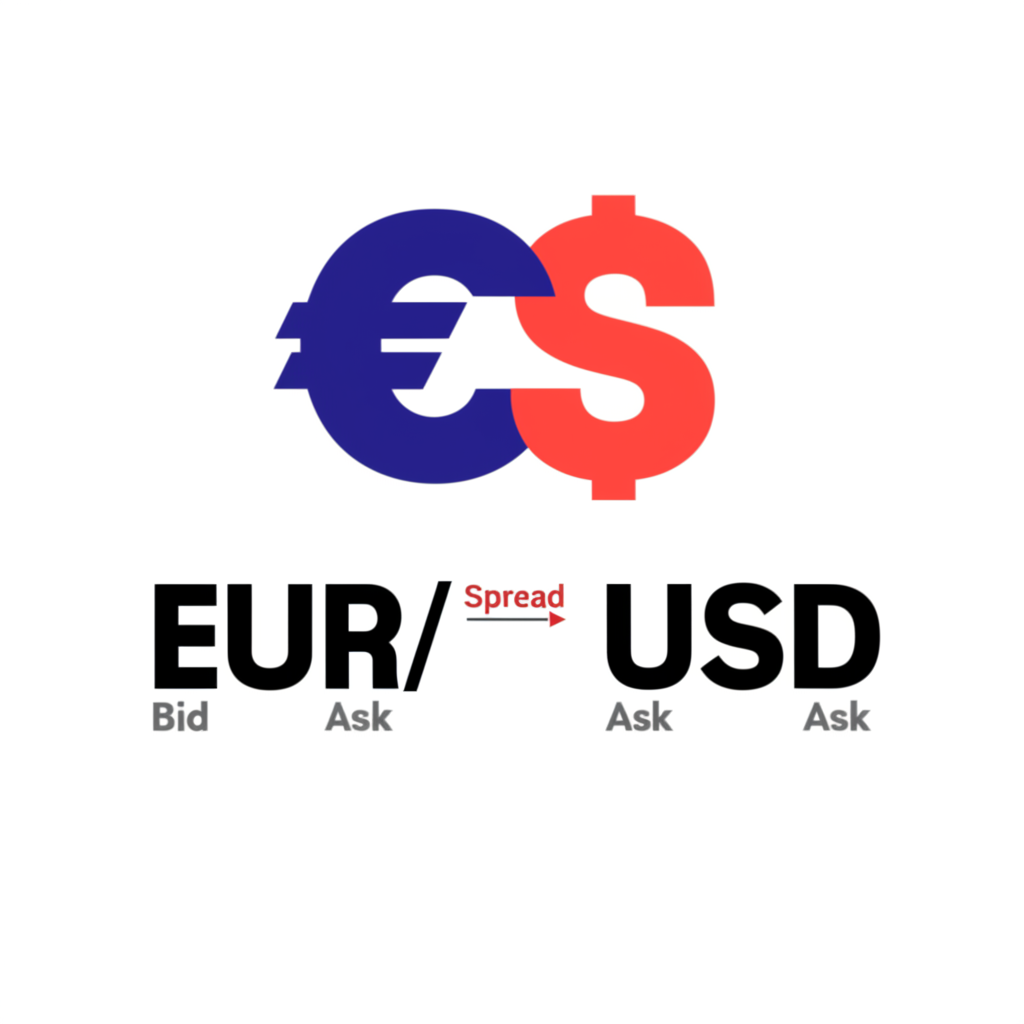
Currencies are always traded in pairs because every transaction involves exchanging one currency for another. Take EUR/USD, for instance: the euro is the base currency, while the US dollar is the quote currency. If the pair is quoted at 1.1050, it means one euro costs 1.1050 US dollars. These quotes come with two prices: the bid and the ask. The bid reflects the highest price a broker is willing to pay to buy the base currency from you, while the ask is the lowest price at which they’ll sell it to you. The gap between these two values is the spread—a key component of trading costs and a primary way brokers earn revenue.
Major pairs like EUR/USD, GBP/USD, USD/JPY, and USD/CHF dominate trading volume thanks to their high liquidity and narrow spreads. In contrast, minor pairs (such as EUR/GBP) and exotic pairs (like USD/SGD) involve less-traded currencies, resulting in wider spreads and potentially slippage during volatile conditions. For US traders, focusing on major pairs often offers a more predictable and cost-effective entry point into the market.
Key Terms in Forex: Pips, Lots, and Leverage
To navigate the forex landscape effectively, traders must grasp several foundational concepts:
- Pip: Short for “percentage in point,” a pip measures the smallest price movement in most currency pairs. For example, a shift from 1.1050 to 1.1051 in EUR/USD represents a one-pip change. On yen-based pairs like USD/JPY, a pip is typically the second decimal place. Tracking pips is essential for calculating gains or losses.
- Lot: Forex trades are executed in standardized units called lots. A standard lot equals 100,000 units of the base currency, a mini lot is 10,000, and a micro lot is just 1,000. Micro lots are particularly beneficial for beginners or those with limited capital, allowing for precise position sizing and risk control.
- Leverage: This allows traders to open larger positions than their account balance would otherwise permit. With 50:1 leverage, for instance, $1,000 controls $50,000 in currency. While leverage can boost profits, it equally magnifies losses, making it one of the most dangerous tools for inexperienced traders.
- Margin: This is the amount of capital required to open and maintain a leveraged trade. It acts as a security deposit rather than a fee. If losses deplete the margin below a certain level, a margin call may trigger automatic position closures.
Understanding these mechanics is critical, especially under US regulations that cap leverage and enforce strict margin requirements to protect retail traders.
How Does Online Currency Trading Work?
The forex market operates through a vast, decentralized network of financial institutions and online brokers. Unlike stock exchanges, there’s no central physical location. Instead, trades occur electronically over-the-counter (OTC), with prices determined by supply and demand across global liquidity providers. When you trade online, your broker connects you to this interbank market, executing your orders based on real-time pricing.
Trading runs 24 hours a day, five days a week, cycling through major financial centers: Sydney opens first, followed by Tokyo, London, and finally New York. This continuous flow means news events—like central bank announcements or geopolitical developments—can trigger immediate price reactions at any hour.
When placing a trade, you’re either going long (buying the base currency, anticipating appreciation) or going short (selling it, expecting depreciation). Orders are placed through your broker’s trading platform, where you can use several types:
- Market Order: Executes instantly at the current price.
- Limit Order: Sets a target price better than the current market rate—useful for entering trades at favorable levels.
- Stop-Loss Order: Automatically closes a position when the price hits a predefined level, helping limit downside risk.
- Take-Profit Order: Closes the trade once a desired profit level is reached, locking in gains without emotional interference.
These tools form the backbone of disciplined trading, enabling automation and reducing impulsive decisions.
The Role of a Forex Broker and Trading Platforms
A forex broker serves as your gateway to the global currency market. They provide the infrastructure—trading accounts, execution speed, pricing, and customer support—necessary to participate. In the US, brokers must comply with stringent oversight from the Commodity Futures Trading Commission (CFTC) and the National Futures Association (NFA), ensuring transparency and client protection.
Modern trading platforms blend real-time data, technical analysis tools, news integration, and order execution into a single interface. Among the most widely used are:
- MetaTrader 4 (MT4): Known for its powerful charting, technical indicators, and support for automated trading via Expert Advisors (EAs).
- MetaTrader 5 (MT5): An upgraded version with enhanced analytical capabilities, more timeframes, and improved order types.
- cTrader: Offers a clean design, deep market insights (Depth of Market), and fast execution, appealing to more advanced users.
- Proprietary Platforms: Many brokers develop custom interfaces tailored to specific trading styles or beginner-friendly experiences.
Whichever platform you choose, mastering its features—especially risk management tools and order types—is essential for consistent performance.
Why Trade Currency Online? Benefits and Risks
The appeal of online currency trading lies in its accessibility, flexibility, and profit potential. Yet, it’s not without serious drawbacks. A balanced view helps traders make informed decisions.
Benefits of Online Currency Trading:
- High Liquidity: The forex market’s immense size ensures tight spreads and rapid order execution, even during major news events.
- 24/5 Market Access: With no daily closure, traders can react in real time to economic data, political shifts, or global crises.
- Low Entry Barriers: Many US-regulated brokers allow accounts to be opened with as little as $50 or $100, especially with micro lot options.
- Profit from Both Rising and Falling Markets: Unlike traditional investing, you can profit whether a currency strengthens or weakens.
- Leverage (When Used Wisely): Enables meaningful exposure even with modest capital, though it requires extreme caution.
Significant Risks Associated with Online Currency Trading:
- Leverage Risk: High leverage can wipe out an account in minutes during adverse moves. US regulations limit this to 50:1 for majors, but even that can be dangerous.
- Market Volatility: Unexpected economic reports, natural disasters, or policy shifts can cause sharp, unpredictable swings.
- Counterparty Risk: Though reduced by regulation, there’s always a chance a broker fails to honor its obligations.
- Interest Rate and Carry Trade Risk: Holding positions overnight exposes traders to swap rates, which depend on interest rate differentials.
- Psychological Challenges: Fear, greed, overtrading, and revenge trading are common pitfalls that derail even technically skilled traders.
Recognizing both the rewards and dangers is the first step toward sustainable trading.
Understanding Leverage: A Double-Edged Sword
Leverage is a defining feature of forex trading—offering outsized returns with minimal capital, but also capable of wiping out accounts just as quickly. Consider this: with 50:1 leverage, a $2,000 deposit controls a $100,000 position. A 1% favorable move yields $1,000—50% profit. But a 1% move against you erases half your account.
Worse, if losses exceed available margin, a broker may issue a margin call, demanding additional funds or closing positions automatically. In extreme cases, rapid price gaps can lead to negative balances, though US brokers typically prevent this through built-in safeguards.
This is why many professional traders advocate using far less leverage than allowed—even 10:1 or 5:1—to survive market volatility. Discipline, not aggression, defines long-term success.
Getting Started with Online Currency Trading in the US
For US residents, entering the forex market requires navigating a strict but protective regulatory environment. The process begins with education, followed by selecting a compliant broker and building sound habits.
Choosing a Regulated US Forex Broker
The cornerstone of safe trading is selecting a broker regulated by the CFTC and registered with the NFA. These agencies enforce rules designed to prevent fraud, ensure fair pricing, and protect client funds. You can verify a broker’s standing using the NFA’s BASIC system.
Key factors to consider include:
- Regulatory Compliance: Non-negotiable. Only work with NFA/CFTC-registered firms.
- Platform Reliability: Look for stable, intuitive platforms with mobile access, advanced charting, and fast execution.
- Customer Support: Responsive, knowledgeable service can make a difference during critical moments.
- Trading Costs: Compare spreads, commissions, and swap fees across brokers. Tight spreads matter most for short-term traders.
- Account Options: Demo accounts are invaluable for practice. Live accounts should offer flexibility in lot sizes and leverage.
- Funding Methods: US traders typically use bank transfers (ACH or wire). Credit card deposits are generally prohibited for forex accounts.
Additionally, ensure the broker segregates client funds—a legal requirement in the US that protects your money if the firm faces insolvency.
Opening and Funding Your Trading Account
Once you’ve selected a broker, opening an account is straightforward but involves compliance steps:
- Complete the Application: Provide personal details, employment status, and investment experience.
- Submit KYC Documents: Upload a government-issued ID (like a driver’s license or passport) and proof of address (such as a utility bill).
- Fund Your Account: After approval, deposit funds via ACH, wire transfer, or sometimes debit cards. Avoid brokers that push aggressive funding bonuses.
Remember, funding is just the beginning. Many new traders rush into live trading without practice. Start with a demo account to simulate real-market conditions without financial risk.
Can I Start Online Currency Trading with $100?
Technically, yes. Several US-regulated brokers allow micro accounts with $100 or less. These accounts support micro lots (1,000 units), enabling small trades that align with limited capital.
However, practical limitations abound. With $100, risking 1% per trade means only $1 is on the line—making it difficult to achieve meaningful returns. Worse, traders often compensate by over-leveraging, increasing the chance of a total loss.
For those starting small, the goal should be learning—not earning. Use the account to:
- Practice placing orders and managing positions.
- Test risk management rules in live market conditions.
- Develop discipline through journaling and review.
Treating a $100 account as a training ground, rather than an income source, sets the right mindset. Most professionals recommend starting with $500 to $2,000 for more sustainable trading flexibility.
US Forex Regulations: What Every Trader Must Know
The US maintains one of the world’s most protective regulatory environments for forex traders. Oversight by the Commodity Futures Trading Commission (CFTC) and the National Futures Association (NFA) aims to prevent fraud, ensure transparency, and curb excessive risk-taking.
The CFTC regulates derivatives markets, including spot forex, and works to uphold market integrity. The NFA, as a self-regulatory body, enforces compliance, conducts audits, and handles investor disputes. Together, they maintain a public database of registered firms and issue warnings about unlicensed operators.
For traders, understanding these rules isn’t optional—it’s essential for safety and compliance.
Key Regulatory Protections for US Traders
US forex regulations include several investor safeguards not found in other jurisdictions:
- Leverage Caps: Limited to 50:1 for major pairs and 20:1 for minors. This prevents the dangerously high leverage (like 500:1) offered elsewhere.
- FIFO (First In, First Out) Rule: If you hold multiple positions in the same pair, the first opened must be the first closed. This restricts complex hedging strategies.
- No Hedging Allowed: Most US brokers don’t permit holding opposing long and short positions on the same currency pair due to FIFO enforcement.
- Segregated Client Funds: Your money must be held in separate accounts at regulated banks, shielding it from broker insolvency.
- Negative Balance Protection: While not codified in law, US brokers typically prevent accounts from falling below zero through margin calls and automated liquidation.
These rules may feel restrictive, especially to experienced traders used to offshore platforms. But they exist to protect retail investors from catastrophic losses in a high-risk market.
Identifying and Avoiding Forex Scams
Forex scams are rampant, preying on hopes of quick wealth. The CFTC and NFA frequently warn about fraudulent schemes targeting US traders.
Red Flags of a Forex Scam:
- Guaranteed Profits: No legitimate strategy promises consistent returns. If it sounds too good to be true, it is.
- Unregistered Brokers: Always confirm NFA/CFTC registration. Operating without it in the US is illegal.
- Pressure to Deposit Quickly: Scammers create urgency to bypass due diligence.
- Automated “Profit Machines”: Robots or EAs that promise effortless gains often fail or are outright scams.
- Withdrawal Issues: Difficulty accessing funds is a major warning sign.
- Unsolicited Contact: Be wary of cold calls, spam emails, or social media DMs promoting trading opportunities.
How to Protect Yourself:
- Verify the broker on the NFA BASIC website.
- Read independent reviews and check for regulatory disciplinary actions.
- Start with a small deposit and test withdrawals early.
- Invest time in learning—scammers target the uninformed.
If you suspect fraud, report it immediately to the CFTC Complaint Center.
Essential Tools and Resources for Online Currency Traders
Beyond platforms and brokers, successful traders rely on a suite of tools to inform decisions and improve execution.
- Charting Software: Built into platforms like MT4 and cTrader, these tools allow for technical analysis using candlestick patterns, moving averages, RSI, MACD, and more.
- Economic Calendars: Track upcoming events like Fed rate decisions, employment reports, and inflation data—key drivers of currency moves.
- News Feeds: Real-time updates from sources like Bloomberg, Reuters, or integrated platform feeds help traders stay ahead of market-moving news.
- Market Sentiment Indicators: Show whether traders are net long or short on a currency, offering contrarian signals.
- Volatility Tools: Such as Bollinger Bands or Average True Range (ATR), help assess market conditions and adjust position sizes accordingly.
These resources, when used together, create a comprehensive trading toolkit.
留言